Events
Reflections on the 2026 Institutional Client Symposium
This year’s annual Institutional Client Symposium in New York took place amidst pronounced disruption and change for nonprofits and foundations, as they face shifts in trade policy, the evolving AI landscape, global tensions, and reductions in federal funding that can “feel a little unsettling,” as Stephanie Kenary, Co-Head of the Institutional Client Solutions business at Goldman Sachs, noted in her opening remarks.
We are pleased to share key insights from the event that can help organizations navigate these changes, with strategic perspectives from leaders in our network on geopolitics, artificial intelligence, leadership, and more.
US Resilience in a Shifting Global Landscape

While volatility surrounding ongoing geopolitical developments is likely to persist, the Wealth Management Investment Strategy Group (ISG) at Goldman Sachs continues to believe US assets will be supported by the enduring economic and structural advantages that underpin its US Preeminence investment theme.
These advantages—including the resilience of the economy, innovation, and productivity— remain intact and are unlikely to be undermined by any one administration or any one war. ISG believes these advantages should translate to faster and more reliable earnings growth potential of US companies, relative to global peers, reaffirming the group’s view to stay invested in an ‘overweight’ position to US equities (higher US equity allocation relative to the global equity index).
“When you look at the strength of US corporate earnings and innovation, you see this is not something that could be that readily derailed,” says Sharmin Mossavar-Rahmani, Head of the Investment Strategy Group and Chief Investment Officer of Wealth Management at Goldman Sachs.
ISG’s view to stay invested in US equities does not preclude occasional pullbacks that can happen at any time. Pullbacks of about 5% to 10% represent normal equity volatility, rather than a compelling reason to underweight stocks.
Global Pulse: Geopolitics in Focus
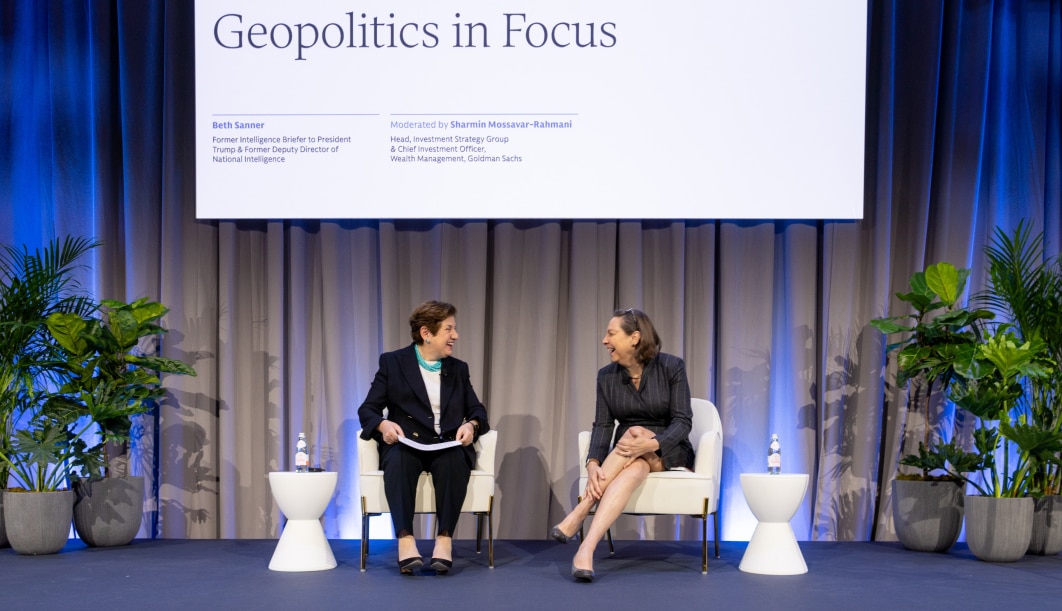
Amidst global conflicts and disruption, a number of governments—including the US, Iran, China, and Russia—have been rethinking their global roles and strategies. “Countries are realizing economic warfare works and can be imposed by any number of actors,” says Beth Sanner, Former Intelligence Briefer to President Donald Trump and Former Deputy Director of National Intelligence. “But we’re also entering a new era where we don’t have international norms and rules to prevent these things from happening. And I don’t think we’re completely prepared for what that means.”
As countries reconsider priorities and relationships, Sanner says stakeholders must be willing to face the world as it is, not as it was—and resist the pull of yesterday’s logic. “I like this Peter Drucker quote: The greatest danger in times of turbulence is not the turbulence itself, but to act with yesterday's logic. I think it's really important for us to rewire our mental maps about what's going on in the world,” she says.
Coping With Disruption: Lessons From Nonprofit Leaders
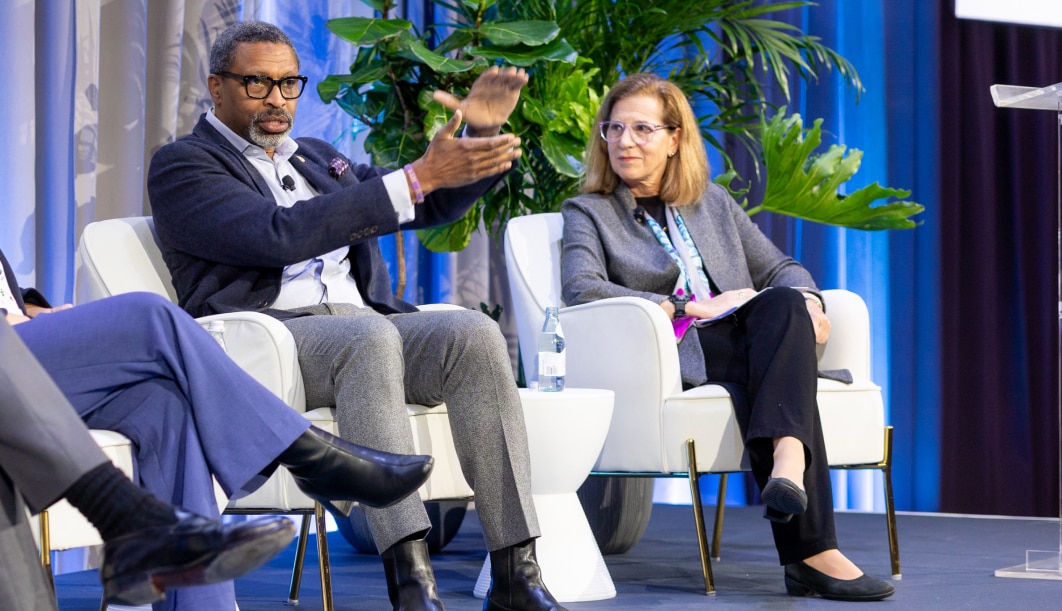
A panel of nonprofit leaders shared practical strategies for navigating federal funding disruptions, maintaining their organizations' missions, and adapting to changing circumstances that many organizations are facing.
Boards have become a particularly essential resource during this time, says Derrick Johnson, President and CEO of the NAACP. “They bring both actual and relational capital,” that can help organizations continue their mission during challenging seasons, he says. Lindsay Farrell, President and CEO of Open Door, also underscored the importance of board relationships. “Caring for the board is one of our most important jobs as chief executive officers,” she says. “They’re really our eyes and ears for what’s happening across the community, and their experiences advance our organization forward.”
Johnson noted that organizations can dip into reserves during leaner times, but that shouldn’t be a permanent practice. “You still have to rightsize your operation,” he says, and consider areas where it’s possible to scale back.
Despite challenges, nonprofits are displaying resiliency and finding innovative solutions to continue their impactful work. Farrell shared how her organization is adjusting staffing, using clinicians with teams of nurses and physician assistants. “We've had to change our business model. We’re blazing new trails when it comes to how to deliver excellent primary care, and we're doing that through a team-based model,” she says.
The AI Frontier: Opportunity and Risk
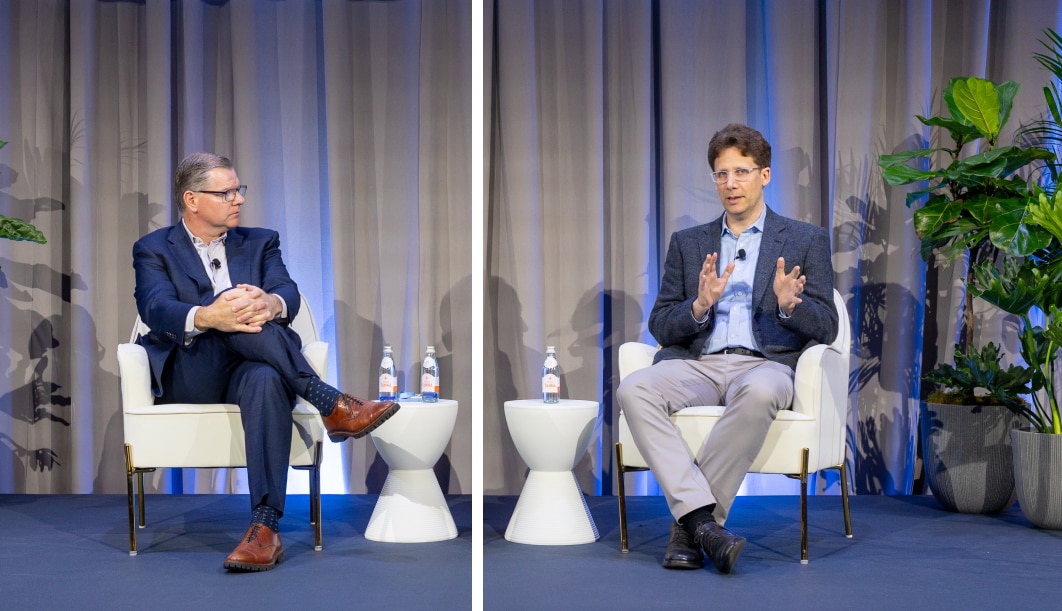
Artificial intelligence is transforming many aspects of modern life. Tom Griffiths, Director of the Princeton Laboratory for Artificial Intelligence, shares that he thinks of AI as “meta-disruptive,” meaning it doesn’t just disrupt a specific industry but rather how we approach and solve problems on the whole. “By turning certain problems over to AI, we are able to iterate and find better ways of solving that problem, extracting more value from it,” he says.
As a college educator, Griffiths is also rethinking the role AI can play in education. He assigns work that students do without AI, as well as assignments where AI use is encouraged, and thinks AI is going to bring forth a critical skill shift in schools and workplaces. “I think previously, the way we thought about learning was more about generating work,” he says. “AI is really good at generation, so now what's more important is evaluation: being able to know whether something has done a good job of solving a problem for you. That's really important in a world where you're going to be managing AI systems that are generating things for you that you need to evaluate.”
Although leaders and organizations may feel pressure to quickly implement AI tools into their workflows, the technology is still in early stages of adoption, notes Jim Covello, Head of Global Equity Research in Global Investment Research at Goldman Sachs. Organizations should take time to thoughtfully map out which systems and processes could benefit from AI tools and ensure they have guardrails in place to address some of AI’s risks and limitations, including hallucinations, bias, and privacy issues.
Fireside Chat With David Solomon: Focus in Times of Complexity
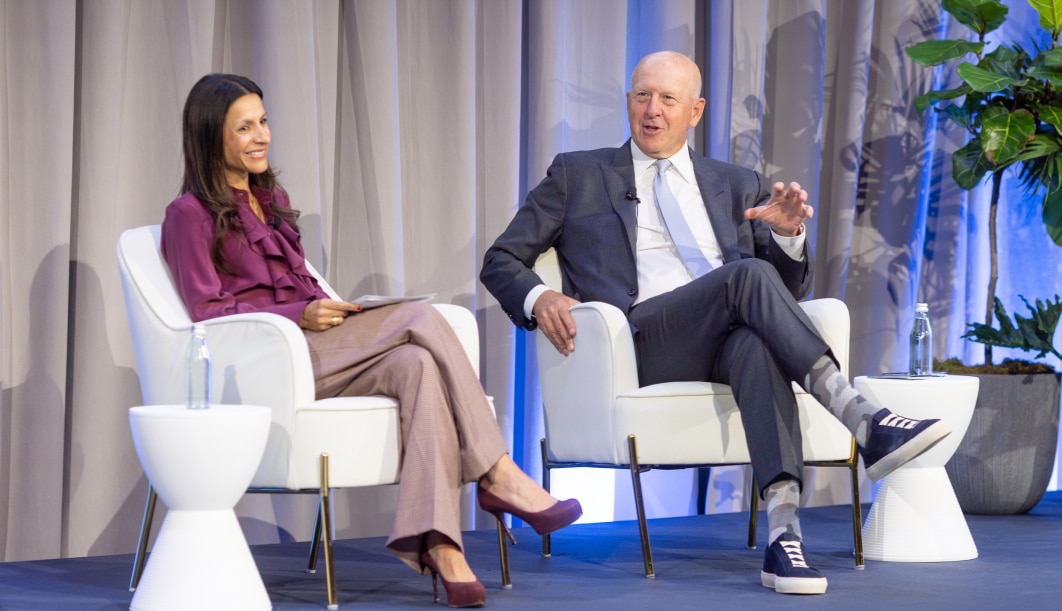
In a wide-ranging discussion on the US and global economic landscape in 2026, David Solomon, Chairman and CEO of Goldman Sachs, acknowledged that we’re living in “a complex moment.” While geopolitical tensions haven’t yet impacted the US economy on a wider scale, they could turn into economic pressures if the conflicts continue, impacting growth, inflation, and consumer behavior. AI could be one of the economy’s bright spots, continuing to make a “profound impact on business and human productivity,” Solomon says, while also noting that “it’s not a panacea to human judgment” and will not replace the nuanced reasoning that defines human decision-making.
In times of disruption and change, Solomon thinks it’s important for organizations to remain focused on their missions and strategic goals. “It’s a complicated and uncertain moment, but as a society, we’ve always had the incredible ability to work through difficult things,” he says. “I try to filter out the noise and think about what matters most in the long- and medium-term.”
Constitutional Law Under Pressure: Do the Guardrails Hold?
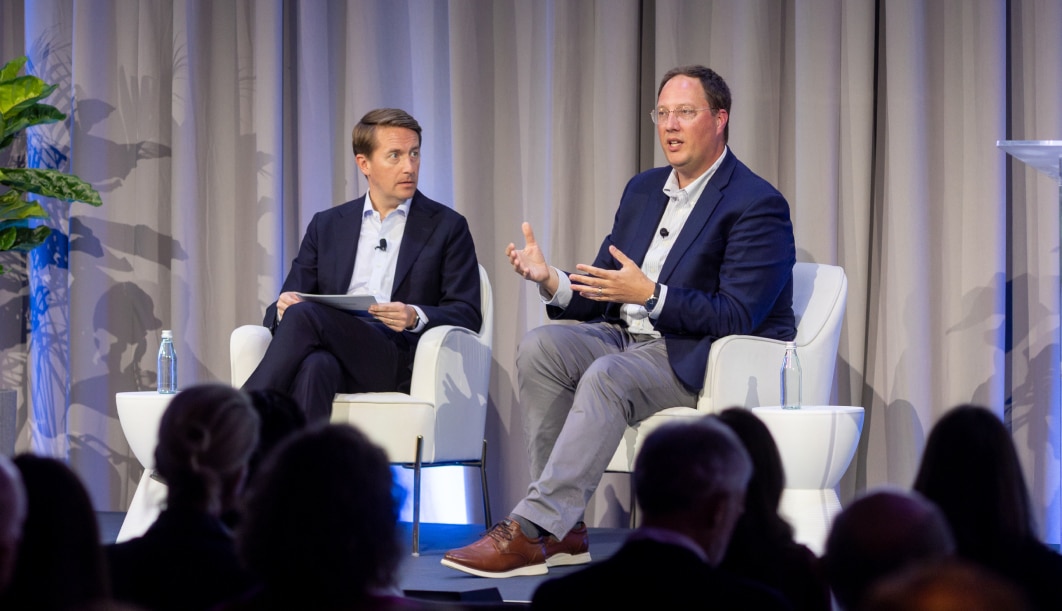
In a political era marked by radical norm breaking, the structural integrity of the US legal system and rule of law is still intact, says Adam White, Senior Fellow at the American Enterprise Institute. “So far, the basic system of checks and balances is doing an admirable job,” he adds. This includes the courts, which are trying to keep up with extensive policymaking and executive orders. “The courts were built for deliberation, not speed. They have now been put under enormous strain and challenge, and have had to find ways to adapt,” says White.
White thinks the broader role reversal between government branches could be more disruptive. “The original system of Congress making laws, the president executing those laws, and the courts hearing cases afterwards was meant to stabilize government,” he says. “Over the last several administrations, we have trained presidents to think first and foremost as our law givers. This shift has forced judges to make decisions on the spot, with little or no explanation, almost like a miniature executive, and Congress sits in judgment of it all.”
Keynote Session: In Conversation With Jon Meacham
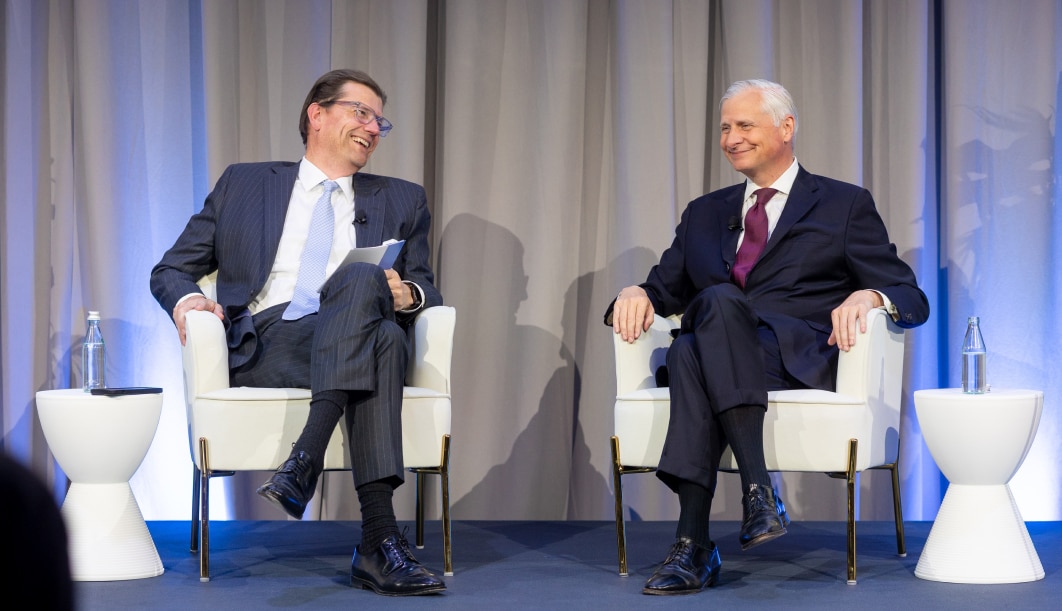
Jon Meacham, renowned historian and Pulitzer Prize-winning author, offered perspectives on leadership and the intersection of American history and current political affairs. His interest in profiling American presidents—including Abraham Lincoln, Andrew Jackson, and George H.W. Bush—stems from a desire to capture not just a person, but a generation. “Presidents embody eras. In their stories, we don’t just see them—we see all of us,” he says.
Meacham discussed how in times of conflict and unrest, people search for a historical perspective to help them understand and contextualize the present. Using history as a guide, he believes that “in extreme times, we have done the right thing,” but cautioned that progress requires constant effort and partnership, especially in a time of polarization. He referenced an Alexander Hamilton quote that suggests the “American experiment” succeeds when reason and deliberation prevail over force. “We don’t want to be the generation who loses the experiment,” Meacham says.
This material is intended for educational purposes only and is provided solely on the basis that it will not constitute investment advice and will not form a primary basis for any personal or plan’s investment decisions.
Information and opinions expressed by individuals other than Goldman Sachs employees do not necessarily reflect the view of Goldman Sachs. Information and opinions are as of the date of this material only and are subject to change without notice. This material may not, without Goldman Sachs' prior written consent, be (i) copied, photocopied or duplicated in any form, by any means, or (ii) distributed to any person that is not an employee, officer, director, or authorized agent of the recipient.
Investment Strategy Group. The Investment Strategy Group, part of the Asset & Wealth Management business (“AWM”) of Goldman Sachs, focuses on asset allocation strategy formation and market analysis for GS Wealth Management. Any information that references ISG represents the views of ISG, is not financial research, and is not a product of GS Global Investment Research (“GIR”) or Goldman Sachs Asset Management and may vary significantly from views expressed by individual portfolio management teams within AWM, or other groups at Goldman Sachs.
© 2026 Goldman Sachs. All rights reserved.
Goldman Sachs & Co. LLC is registered with the Securities and Exchange Commission (“SEC”) as both a broker-dealer and an investment adviser and is a member of the Financial Industry Regulatory Authority (“FINRA”) and the Securities Investor Protection Corporation (“SIPC”).