Reflections From the 2026 In the Lead EMEA Conference

Female Founders: Harnessing Passion in Entrepreneurship
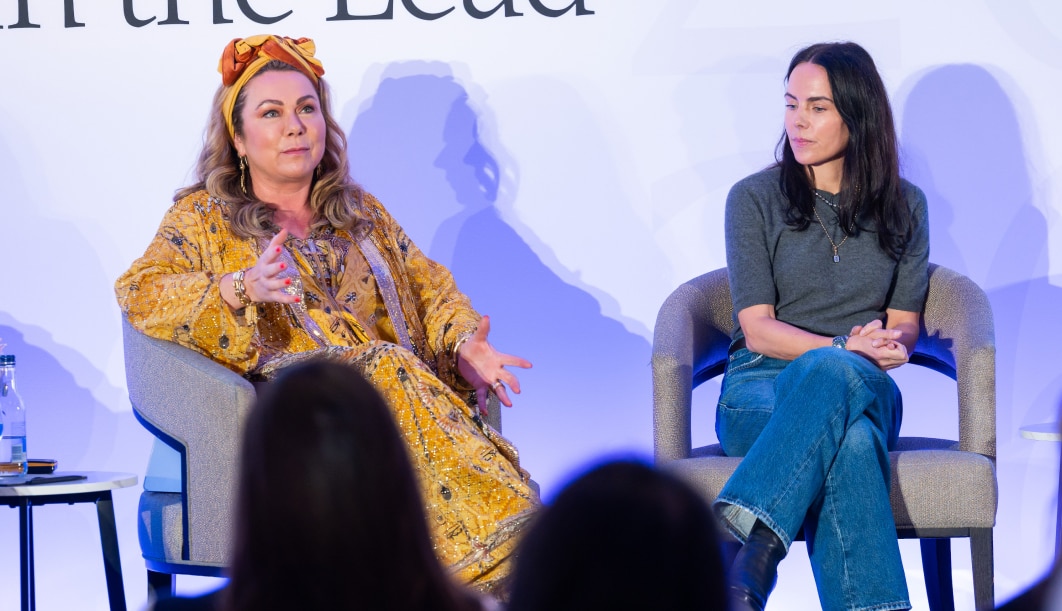
In a crowded and competitive market, how can entrepreneurs and their ideas stand out? Passion can be an overlooked superpower.
“Passion is not a soft skill—it's a strategic weapon,” says Holly Tucker MBE, serial entrepreneur and founder of Not On The High Street and Holly & Co. “If you walk into a room, one of the most dangerous things you can come across is someone who loves what they do and does what they love because you can't beat them.” When you’re able to communicate a passion for your brand and products with authenticity and enthusiasm, you can strengthen both customer loyalty and investor conviction, turning interest into lasting commitment.
Your passions and ideas can still evolve as you grow and scale your business, says Jessica McCormack, founder and creative director of Jessica McCormack Jewellery. McCormack didn’t initially set out to create a women-centered brand but that's where she eventually landed. “There are lots of men selling diamonds to men who are designing jewellery for men to purchase for women. I decided I wanted to make jewellery for the women who are buying it,” she says.
The panelists shared how it’s still difficult for women to secure funding and get their ideas off the ground. Research has found that in the UK, only two pence of every £1 invested in venture capital funding goes to female-founded businesses¹. With a lack of venture capital and private equity opportunities, Mia Drennan, founder and CEO of GLAS, thinks a new funding source is warranted. “I think it’s time to figure out how we can all be involved in creating a new investment, a new financing platform to really support women entrepreneurs,” she says.
Culinary Excellence: Rising Above the Rest With Clare Smyth MBE
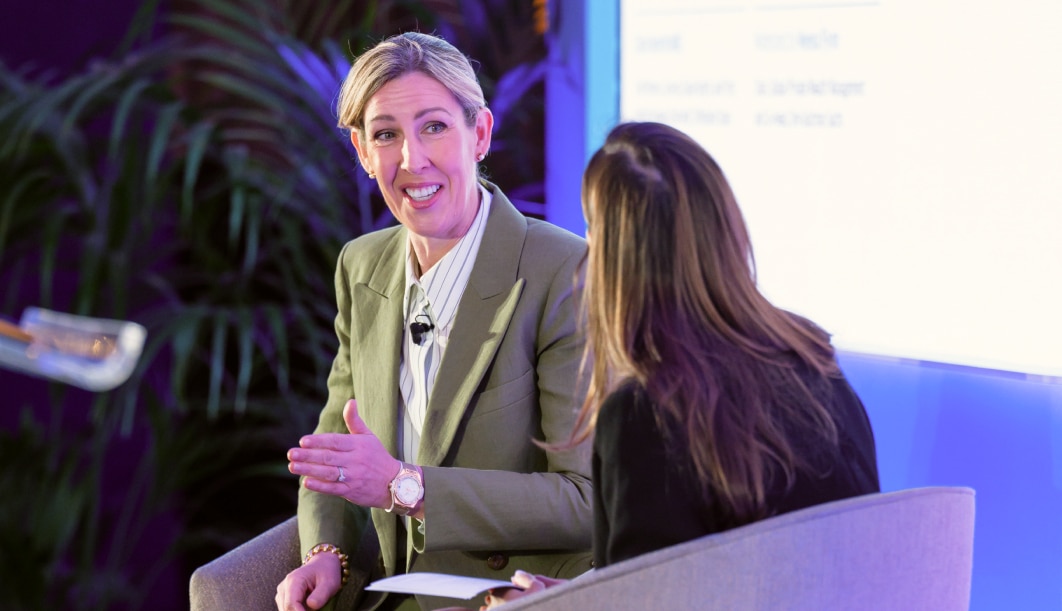
In the cutthroat world of fine dining, Clare Smyth has been able to rise above the rest. At 28 years old, she was the first woman to lead a three-star Michelin kitchen and the first British female chef with three Michelin stars.
To reach the top of any industry, she thinks it’s crucial for aspiring leaders to surround themselves with top talent by “working for and learning from the best,” she says.
Smyth also strove to create a standout brand by rethinking and innovating the entire fine dining experience. She removed culinary jargon from menus, created an interactive wine list with engaging quotes and images, and poured her energy into building a warm and dedicated team. “I want to remove the pretentiousness around fine dining. If you’re not comfortable, you’re not going to enjoy yourself,” she says. “I want to hook people into my world, so they want to come back.”
Smyth’s hospitality and surprising takes on British staples are the key to her success. Elevating classic dishes and comfort food can be a long process; Smyth and her team can go through dozens of iterations before landing on the perfect one. But she thinks the effort is worth the work. “I prefer taking the harder route to challenge myself and my creativity to come up with something that is more unique and surprising,” she says. This dedication to ingenuity and her craft helps fill her dining room, night after night.
How to ‘Fail Better’: Reframing Setbacks With Elizabeth Day
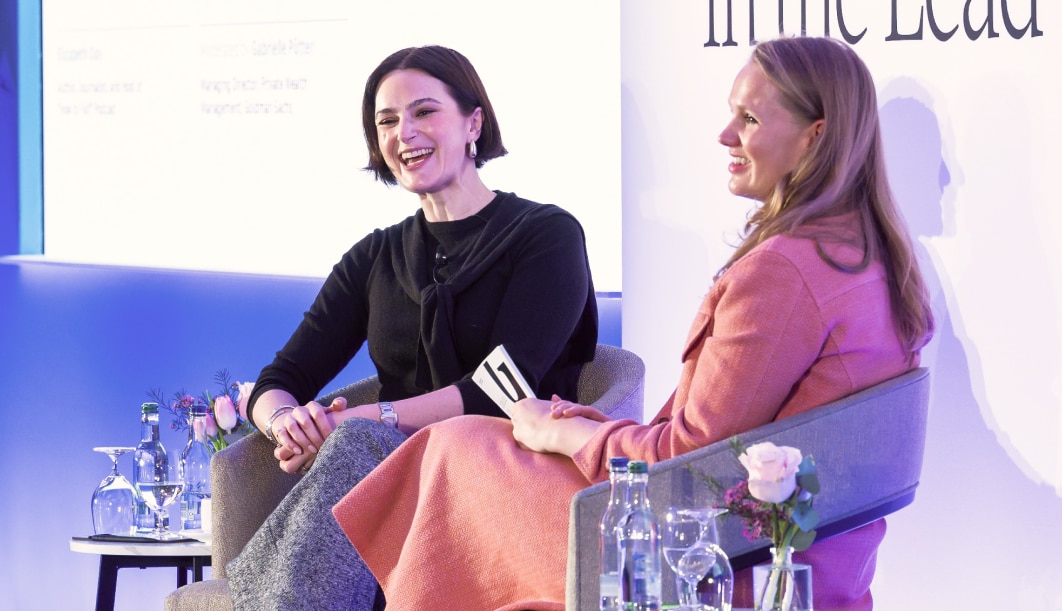
Failure can be painful and disorienting, but it can also be deeply productive and rewarding—if you’re able to reframe the experience.
Elizabeth Day, author, journalist, and host of the How to Fail podcast, believes that every failure offers the opportunity to learn something meaningful. Even when the lesson is simply recognizing one’s own resilience, she sees value in the experience.
Day observes that women and marginalized individuals are often more likely to interpret failure as a reflection of their personal worth, while men tend to view it as a temporary setback that is separate from their identity. She suggests that adopting this more detached perspective can be a helpful way to reframe failure.
She also encourages thinking of a failed experience as an experiment—one that provides valuable data about what didn’t work and brings you closer to what ultimately will.
Reframing setbacks in this way takes practice. It’s important to allow space to process the experience and grieve what was lost or difficult, while gradually embracing failure as a source of clarity, growth, and resilience.
Wealth Psychology: Charting Your Own Path
In any family, it can be difficult to forge a new path while navigating family expectations and dynamics. One approach could be building on your family legacy—in your own unique way. Sophie Lacoste Dournel and her brother bought Fusalp, the French ski apparel brand, to both revitalize an iconic brand and further their family’s textile heritage established with Lacoste.
“I really believe every generation has to bring something new to the family. We all need to be our own Gen One,” says Lacoste Dournel, co-president of Fusalp and former board member of Lacoste.
Stepping away from obligations or a family business can also help you clarify your personal purpose and goals. Séverine Mulliez, supervisory board member of the Association Familiale Mulliez, decided to leave her family’s business to pursue other business opportunities. She eventually returned a few years later but was more selective about her roles. “It was a proper and conscious choice to resume being involved, but only where it makes sense for me and where I knew I could have an impact,” she says.
Families can create structured pathways to help kin and the next generation explore the family business with more intentionality. Séverine Mulliez explained how her family’s various offerings—including job shadowing and internships—allow family members to understand operations, build relevant skills, and test their interest before committing.
AI in Action: The Women Driving Innovation
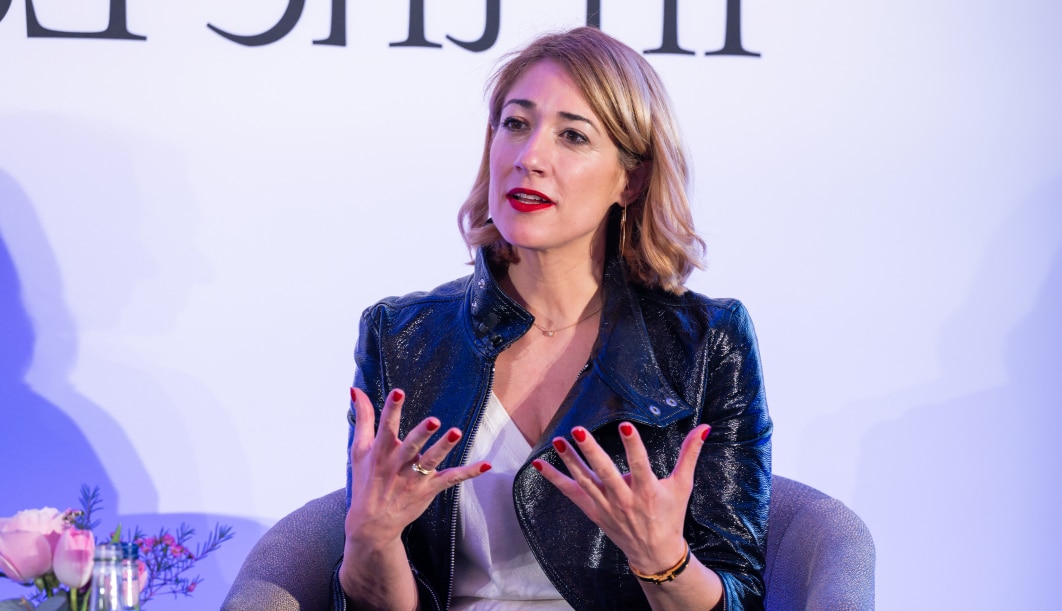
Artificial intelligence is transforming many aspects of modern life, including the way companies operate and compete. In a 2025 survey, 88% of respondents said their organization uses AI in at least one business function, and 64% say their organization’s use of AI has improved innovation, according to data from McKinsey².
Two AI leaders shared how their respective companies are approaching the benefits and risks of this technology—and why human input isn’t going away any time soon.
In 2025, L’Oréal launched Beauty Genius, an AI virtual assistant tool that provides users with expert analysis, product recommendations, and personalized routines. The tool leverages a combination of generative AI, augmented reality, computer vision, and color science—as well as input and analysis from hundreds of specialists, including dermatologists, makeup artists, and quality control professionals.
“Without a human’s expert insight and critical thinking, AI can lack meaning and relevance, ultimately delivering limited value,” says Béatrice Dautzenberg, global director of beauty tech services and open innovation director at the L’Oréal Groupe. She explains that the insights and quality assurance provided by humans can help companies create models that generate more accurate, authentic, and inclusive responses, catalyzing customer use and satisfaction.
Human input is especially critical as models become more performant, adds Sara Africk, head of Private Wealth Management Digital Transformation at Goldman Sachs. “As agents start to do things from start to finish, figuring out where your AI agents are going to be working alongside humans is increasingly more important,” she says.
The Macro Environment: Is it Time to Reduce Exposure to US Equities?
Mariam Kamshad, managing director in the Investment Strategy Group (ISG) at Goldman Sachs explained that ISG’s two key themes of US preeminence and stay invested are intact, despite market volatility and headlines questioning “US exceptionalism.” ISG’s investment theme of US Preeminence is built on several economic, human capital, and financial advantages. These advantages should translate to faster and more reliable earnings growth potential of US companies, relative to global peers, leading ISG to retain their recommendation to stay invested in an overweight position to US equities.
What's ahead for equities in 2026? “Given our expectations for trend-like US GDP growth and supportive corporate fundamentals, we continue to recommend staying invested in US equities. This recommendation does not preclude occasional pullbacks that can happen at any time. Pullbacks of about 5%-10% represent normal equity volatility, rather than a compelling reason to underweight stocks,” says Kamshad.
Some of the expected volatility stems from broader geopolitical shifts. A number of countries, including the US, have been rethinking their global roles and responsibilities. “We're in a period of change where the traditional actors and rules are stepping back, so their partners are now trying to adjust alliances and how they approach defense, security, and investments,” says Rachel Ellehuus, director-general of the Royal United Services Institute.
As countries renegotiate alliances and decide how they’re going to engage in and end conflict, their decisions and the subsequent outcomes can set a precedent for the future. “We have to be very aware that what happens in one region—in this world where the rules are being rewritten—can have lasting implications in other regions of the world,” says Ellehuus.
In the Lead offers women access to an inspiring and accomplished group of peers and brings them together through events, curated content, and insights. To learn more about our global community of women leaders, connect with your Goldman Sachs representative.
1 GOV.UK, 2025. “£500m Government investment to boost growth and opportunity for underrepresented entrepreneurs.”
2 McKinsey & Company, 2025. “The State of AI.”
The participants herein may have relationships with the Firm, including Wealth Management.
Investment Strategy Group (“ISG”). The Investment Strategy Group, part of the Asset & Wealth Management business (“AWM”) of GS., focuses on asset allocation strategy formation and market analysis for GS Wealth Management. Any information that references ISG, including their model portfolios, represents the views of ISG, is not financial research and is not a product of GS Global Investment Research and may vary significantly from views expressed by individual portfolio management teams within AWM, or other groups at GS.
This material is intended for educational purposes only and is provided solely on the basis that it will not constitute investment advice and will not form a primary basis for any personal or plan’s investment decisions. Investing involves the risk of loss, including loss of principal. Alternative Investments such as private equity, private credit, private real estate, hedge funds, may not be suitable for all investors and involve a substantial degree of risk, including the risk of total loss of capital, use of leverage, lack of liquidity, and volatility of returns. Emerging markets and growth markets investments involve certain considerations, including political and economic conditions, the potential difficulty of repatriating funds or enforcing contractual or other legal rights, and the small size of the securities markets in such countries coupled with a low volume of trading, resulting in potential lack of liquidity and price volatility. Non-US securities investments are subject to differing regulations, less public information, less liquidity, and greater volatility in the countries of domicile of the security issuers and/or the jurisdiction in which these securities are traded. In addition, investors in securities such as ADRs/GDRs, whose values are influenced by foreign currencies, effectively assume currency risk. GS does not recommend the purchase of art or collectibles as an investment strategy, nor does it provide formal or informal appraisals of the value of, or opine on the future investment potential of, any specific artwork or collectible. While this material is based on information believed to be reliable, no warranty is given as to its accuracy or completeness and it should not be relied upon as such. Goldman Sachs is not a fiduciary with respect to any person or plan by reason of providing the material herein, information and opinions expressed by individuals other than Goldman Sachs employees do not necessarily reflect the view of Goldman Sachs. This material may not, without Goldman Sachs’ prior written consent, be (i) copied, photocopied or duplicated in any form, by any means, or (ii) distributed to any person that is not an employee, officer, director, or authorized agent of the recipient. This material is not an offer or solicitation with respect to the purchase or sale of any security in any jurisdiction. Investing involves risk, including the potential loss of money invested. Past performance does not guarantee future results. Neither asset diversification or investment in a continuous or periodic investment plan guarantees a profit or protects against a loss. Information and opinions provided herein are as of the date of this material only and are subject to change without notice.
© 2026 The Goldman Sachs Group, Inc. All rights reserved.
Goldman Sachs & Co. LLC is registered with the Securities and Exchange Commission (“SEC”) as both a broker-dealer and an investment adviser and is a member of the Financial Industry Regulatory Authority (“FINRA”) and the Securities Investor Protection Corporation (“SIPC”).