What Was Top of Mind at the 2026 Apex Global Family Office Symposium?
 David Solomon, Chairman & CEO, Goldman Sachs and Sara Naison-Tarajano, Head, Goldman Sachs Ayco; Head, Goldman Partner Office; Co-Head, One Goldman Sachs Family Office
Family office leaders from 19 countries gathered at Goldman Sachs headquarters in New York City for the 2026 Apex Global Family Office Symposium. This exclusive event provided access to the latest thought leadership on the future of markets, AI innovation, investment strategies, and strategic networking opportunities.
Sara Naison-Tarajano gave voice to the shared sentiment in the room of family office leaders who joined the 2026 Apex Global Family Office Symposium. This year’s Symposium explored a wide range of topics that are top of mind for family offices, from AI’s impact on both the investing landscape and society at large, to how macroeconomic and geopolitical variables are factoring into investment decision-making.
Opportunity and Disruption: How AI Is Reshaping Entrepreneurship

Companies and individuals alike are focusing on AI as a catalyst of change, not only in the job market, but also across the broader investing ecosystem. As AI can enhance productivity and allow individuals to do more with less, many of the Symposium’s thought leaders have noted a rise in entrepreneurial activity. Despite the optimistic tone, speakers also acknowledged risks related to workforce disruption, infrastructure constraints, and the evolving regulatory and geopolitical landscape surrounding AI.
AI’s Impact on Different Sectors
Highlighting AI’s potential to level the playing field between incumbent companies and tech-enabled startups, Ken Griffin, Founder and CEO, Citadel, predicted a “golden age of entrepreneurial activity.” Josh Wolfe, Co-Founder and Partner, Lux Capital, echoed this sentiment. “Early adopters are going to be amplified” by the new tools and capabilities that AI can offer. “The competitive moat you think you have in some cases is going to get eroded by people that are not burdened by legacy systems or by people that are set in their ways.”

Joe Lonsdale, Founder and Managing Partner, 8VC, and Co-Founder, Palantir Technologies, cast the defense sector as one of the proving grounds for the AI-era founder, saying defense is a place where bureaucracy has slowed, threats have accelerated, and entrepreneurial speed suddenly matters. He pointed out the opportunity is not abstract but urgent—a chance for technically ambitious companies to rebuild critical systems with software, autonomy, and AI at the core. As he put it, “We saw certain problems were getting more and more expensive, and handled more and more slowly, and said, ‘Wow, there’s a giant gap here.’”
Joe explained what makes AI so impactful in the defense sector is that it is not merely making old contractors incrementally better; it is changing who gets to compete and how quickly they can matter. Lonsdale argued an advantage will increasingly come from faster iteration, lower-cost autonomous systems, and software-driven platforms that can outlearn and outscale legacy approaches. His entrepreneurial instinct is clear: “That’s what entrepreneurs look for: what is broken.” He believes AI is fuel for a new class of defense builders stepping into gaps that incumbents left exposed.
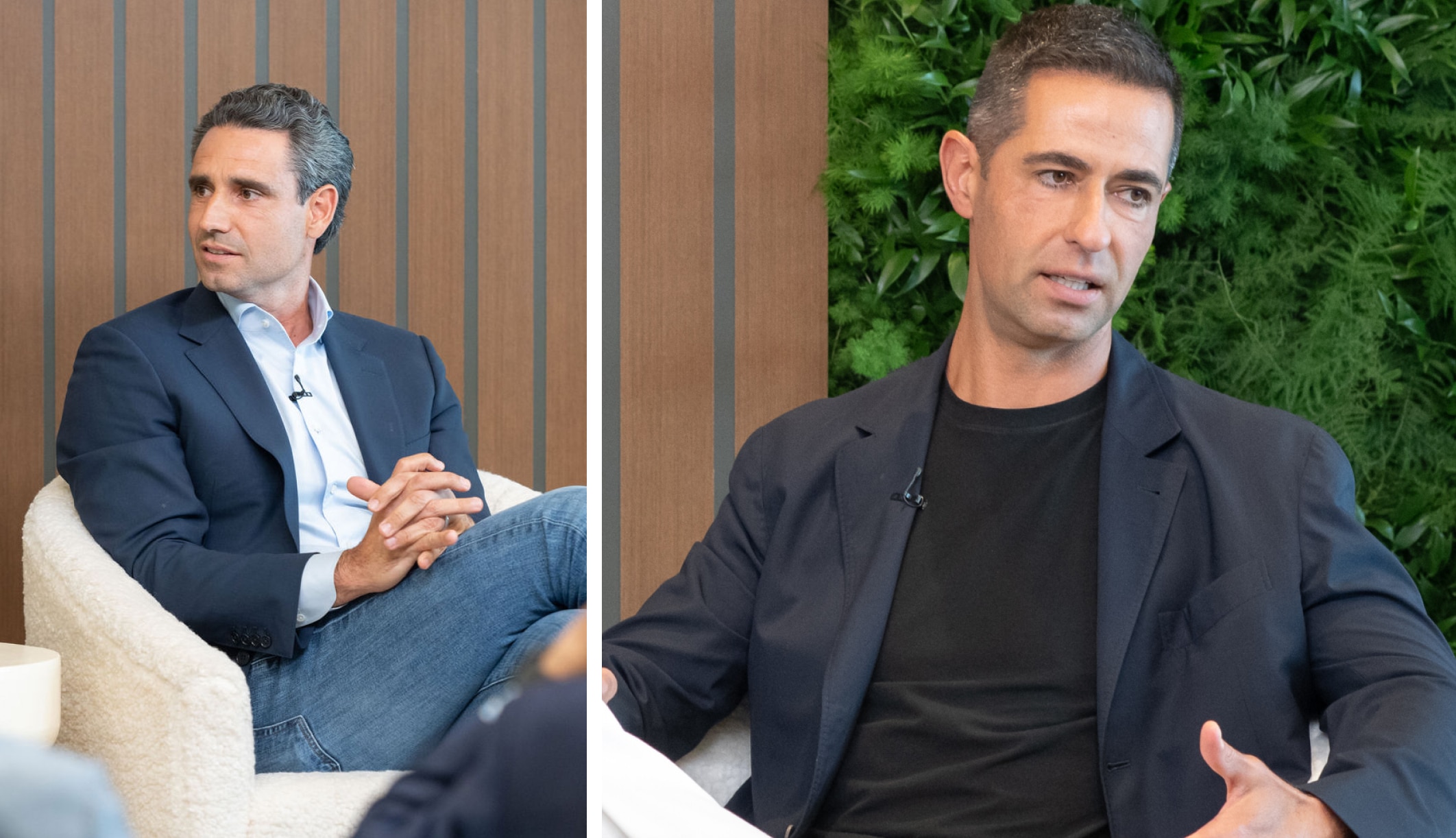
This rapid scaling enabled by AI is reflected in the experience of S&P 500 CEOs such as Adam Foroughi, Co-Founder and CEO, AppLovin, and Ernie Garcia III, President, CEO and Chairman, Carvana, whose companies have continued to grow across market environments and drive efficiencies within their teams.
Foroughi attributed AI and large language models as “the really big unlock for our business, which allowed us to do what we wanted to do at a much larger scale, more efficiently.”
Garcia expects to see a push toward more vertical integration over time, thanks to AI. “We can build these really cool experiences that are totally automated all the way through. I think many companies are going to start building more of the stuff that they used to use from third parties, because you can build much more quickly.”
For example, a data visualization tool built by Carvana will allow the company to move away from using an expensive outside data vendor. This ability for companies to create bespoke tools in-house opens doors to greater potential efficiency, cost savings, and enhanced customer experiences.
AI’s Impact on the Markets

AI emerged as a consistent theme throughout the Symposium, not only as a potential investment opportunity but also as a transformer of market dynamics. Adena Friedman, Chair and CEO, Nasdaq, Inc., emphasized “AI is a massive megatrend, and it will impact every industry over time.” While uncertainty remains about winners and losers during this transformative period, she shared how the current environment presents significant opportunities. The combination of rapid AI innovation, a rise in retail investor participation, and advanced algorithmic trading has led to a dynamic market with potential strategic entry points for investors in the future.
Despite near-term volatility, David Solomon, Chairman and CEO, Goldman Sachs, observed a resurgence in dealmaking, with AI companies raising “unprecedented capital” to scale and drive innovation across the economy. He noted that this wave of investment is contributing to broader economic dynamism, as investors actively reallocate portfolios to participate in what many see as a transformative growth cycle. While individual deals may face uncertainties, Solomon emphasized that long-term value creation ultimately depends on how these companies execute and “trade over time.”
As this investment translates into real economic activity, Solomon also addressed AI’s implications for the labor market, noting that disruption will be “real but manageable.” He pointed to the enduring flexibility of the US economy in the face of technological change. “Over the last 25 years, the US has created and destroyed 30 million jobs on average every year. It’s a very versatile economy,” he said.¹
Private Market Portfolios at an AI Inflection Point

To better understand how AI might be shaping private market portfolios, Kristin Olson, Global Head, Alternatives for Wealth, Goldman Sachs, polled family office leaders in attendance. The majority indicated a willingness to explore AI options, with 41% of respondents sharing they are increasing exposure to AI and 40% reporting they are selectively investing in specific companies within the AI sector.
However, navigating this environment requires discipline. Darren Cohen, Global Co-Head and CIO, Global Growth Equity Business, Goldman Sachs Asset Management, emphasized the importance of maintaining rigorous valuation standards and diversifying across vintages, particularly as the traditional boundaries between venture and growth continue to blur and companies scale at extraordinary speeds.
In this context, alternative strategies are evolving in parallel. Hans Swildens, Partner, External Investing Group, Goldman Sachs Asset Management, noted that the secondary market offers a differentiated opportunity to potentially acquire back-dated assets at a discount, providing a value-oriented entry point in a high-growth, fast-moving environment.
At the same time, private credit continues to evolve as a complementary allocation within global portfolios. Stephanie Rader, Global Co-Head, Alternative Capital Formation, Goldman Sachs, underscored its scale—now approximately $2 trillion in global AUM—and highlighted the importance of navigating an increasingly selective credit cycle.
Strategic Investing During an Era of Geopolitical and Technological Change
With markets reacting to geopolitical and technological influences, family offices are navigating strategies to safeguard their investments and capitalize on new opportunities.
The World on Edge

Conversations around geopolitics hinged on two key topics: conflict in the Middle East and trade relations with China.
Tensions and uncertainty in the Middle East remain top of mind for investors. Jared Cohen, President, Global Affairs and Co-Head, Goldman Sachs Global Institute, cautioned that even a near-term agreement would not mean immediate market resolution. Shipping and oil exports, he noted, would take “a significant amount of time to ramp back up,” and this could have a lingering effect on US and global inflation data.
Meanwhile, the recent summit between the US and China opened the door for a “stable strategic dialogue,” David Solomon observed. “These economies are deeply intertwined with each other,” which gives them mutual influence over each other’s supply chains—an interdependence that sometimes gets lost in the headlines.
Similarly, Ken Griffin discussed the pivotal role Taiwan plays in both economies. Unfettered access to Taiwanese semiconductor chips is directly and indirectly critical to both the US and Chinese economies, he explained.
Griffin’s advice for weathering this type of potential geopolitical risk is to “stress test” portfolios in different hypothetical scenarios. He encouraged investors to consider: “If X happens, how much money are we going to lose, and where? Can I tolerate the loss?”
A Framework for Family Office Capital Allocation
When considering new asset classes and overall portfolio construction, investors can benefit from applying a disciplined review framework, similar to Nasdaq’s approach to vetting new listings. As Adena Friedman outlined, decisions must address core questions such as:
- “Is this something that’s going to either be wealth-creating or can it be a great hedging vehicle?"
- "Can the asset ultimately be institutionalized or is it going to stay in the retail ecosystem?”
To succeed, new assets cannot simply be expensive alternatives to existing systems but must demonstrate clear operational and growth advantages that justify their inclusion in institutional portfolios.
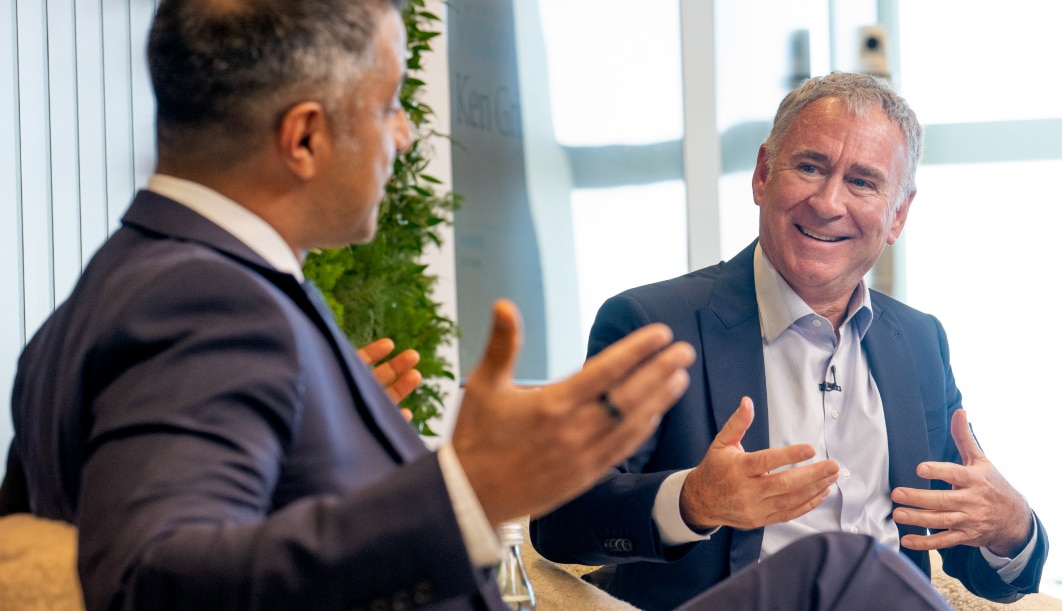
Ken Griffin offered his perspective, explaining that orienting a family office portfolio around a time horizon is critical. In setting a horizon, Griffin’s prompt for investors is to consider who they’re investing for. “Is it for your children? Is it for your children and your grandchildren?” He noted that while most families will naturally adopt a long-term investing horizon, it is important to incorporate personal investing priorities across different generations.
If you have any questions or would like to explore these topics further, please reach out to your Goldman Sachs representative.
¹ US Bureau of Labor Statistics: Gross job gains and gross job losses in the US private sector, by industry, seasonally adjusted (in thousands), 2026.
This material is intended for educational purposes only and is provided solely on the basis that it will not constitute investment advice and will not form a primary basis for any personal or plan’s investment decisions. Investing involves the risk of loss, including loss of principal. Alternative Investments such as private equity, private credit, private real estate, hedge funds, may not be suitable for all investors and involve a substantial degree of risk, including the risk of total loss of capital, use of leverage, lack of liquidity, and volatility of returns. While this material is based on information believed to be reliable, no warranty is given as to its accuracy or completeness and it should not be relied upon as such. Goldman Sachs is not a fiduciary with respect to any person or plan by reason of providing the material herein, information and opinions expressed by individuals other than Goldman Sachs employees do not necessarily reflect the view of Goldman Sachs. This material may not, without Goldman Sachs’ prior written consent, be (i) copied, photocopied or duplicated in any form, by any means, or (ii) distributed to any person that is not an employee, officer, director, or authorized agent of the recipient. This material is not an offer or solicitation with respect to the purchase or sale of any security in any jurisdiction. Investing involves risk, including the potential loss of money invested. Past performance does not guarantee future results. Neither asset diversification or investment in a continuous or periodic investment plan guarantees a profit or protects against a loss. Information and opinions provided herein are as of the date of this material only and are subject to change without notice.
© 2026 Goldman Sachs. All rights reserved.
Goldman Sachs & Co. LLC is registered with the Securities and Exchange Commission (“SEC”) as both a broker-dealer and an investment adviser and is a member of the Financial Industry Regulatory Authority (“FINRA”) and the Securities Investor Protection Corporation (“SIPC”).