Entrepreneurship
Success Unshared Is Failure: An Entrepreneur’s Three Strategies to Build an Impactful Business
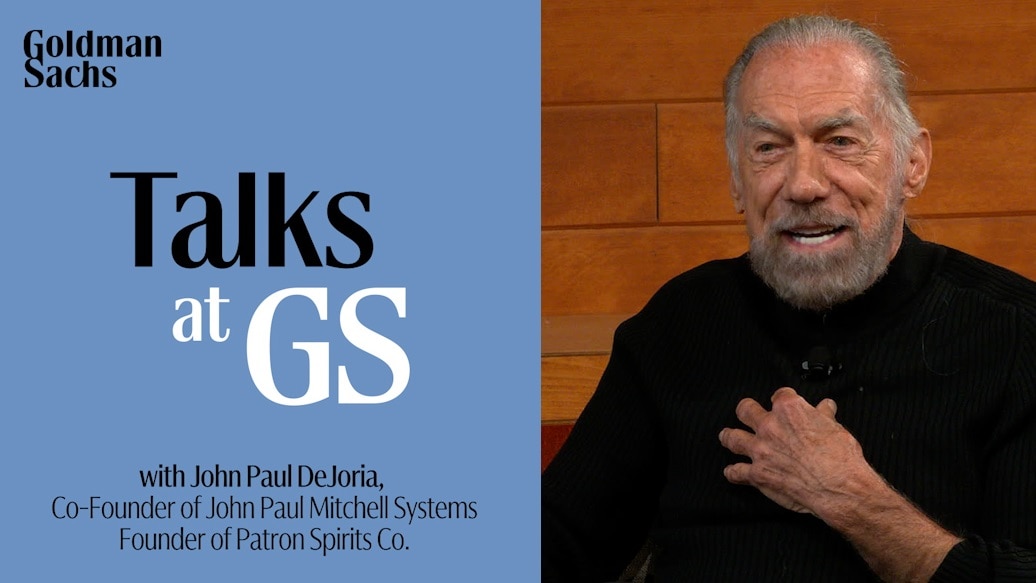
- John Paul DeJoria, co-founder of John Paul Mitchell Systems and Patrón Spirits Company, encourages entrepreneurs to stay true to their values and business vision.
- Creating a quality product or service can promote business longevity.
- DeJoria explains why it’s important to cultivate a mindset of grit and resilience.
Even in an uncertain economic environment, entrepreneurs are finding success.
In 2025, nearly 75% of entrepreneurs reported revenue growth year over year, and 29% have seen growth of more than 20%, according to a survey from global accounting firm EY.
But what does success really mean? Every entrepreneur can have their own unique definition.
John Paul DeJoria, serial entrepreneur and co-founder of leading, multi-billion-dollar brands across industries, including John Paul Mitchell Systems and Patrón Spirits Company, defines success not only as financial—but also as making a commitment to developing impactful business practices, leading with your values, and lifting up others along the way.
He shared his personal and business ethos in a conversation with Meena Flynn, co-head of global Private Wealth Management and co-head of One Goldman Sachs, at the firm’s annual Builders and Innovators Summit. The event brings together visionary entrepreneurs like DeJoria who are making a difference in their respective industries and provides an opportunity to discuss cutting-edge disruption, while connecting with fellow innovators.
At the Summit, DeJoria shared three strategies for driving impact in business.
1. Stay true to your values and business vision
DeJoria encouraged entrepreneurs to commit to their own definition of success. “Believe in yourself and what you think is proper,” he said. “You can listen to other people. You can appreciate them and say thank you. However, don't lose sight of your own goals.”
DeJoria knew he never wanted to sell John Paul Mitchell Systems. For him, success with the brand was to lead with his values, expressing gratitude and commitment to the salon community that supported his products for decades. The decision aligned with his powerful personal motto: Success unshared is failure.
“I told hairdressers that I will always keep the haircare industry part of all our sales, even if distribution changes in the future,” he said. “When I had absolutely nothing and was living out of my car, they believed in me. And I told them no matter what, I'll never let you down. My word was going to be good for future generations of the professional beauty industry.”
To follow through on his commitment, he put the company in a 360-year trust. This decision ensures John Paul Mitchell Systems will stay a private, family business and products will continue to be distributed primarily through salons, enabling hairdressers to retain profits.
2. Quality powers reputation and business growth
At the summit, DeJoria discussed how quality can be a powerful tool to drive growth, especially in today’s crowded market.
“Don’t go into the selling business—go into the reorder business,” he said. “Ensure your product or service is of the highest quality, so people will come back again and again. Ensure it’s so good that people will share it with others and look forward to what you’re coming out with next.”
Differentiating your company with a premium product or service can strengthen customer satisfaction and loyalty and help to secure a steady stream of repeat orders, which can be more profitable and sustainable in the long run.
3. Embrace rejection to cultivate resilience
At the Summit, DeJoria shared the challenges he encountered across his business endeavors, including losing funding from a key investor for John Paul Mitchell Systems and struggling to find a good distributor for Patrón tequila. He believes success comes from a deep commitment to your goals, even when faced with setbacks and rejection—which every entrepreneur will inevitably navigate.
“You’ve got to be able to overcome rejection. If 50 doors are closed in your face, whether it be politely or maybe impolitely, you must be just as enthusiastic on door number 51 as you were on the first 50 doors,” he said.
He sees rejection as an opportunity to double down on your ambitions: “If you know rejection is coming, it doesn’t hit you as hard, and you can keep your mind focused on your goals.”
If you’re interested in more strategies to build lasting personal wealth as an entrepreneur, read our new guide, "Beyond the Build: A Wealth Planning Guide for a Business Exit or IPO."

This material is intended for educational purposes only and is provided solely on the basis that it will not constitute investment advice and will not form a primary basis for any personal or plan’s investment decisions. While it is based on information believed to be reliable, no warranty is given as to its accuracy or completeness and it should not be relied upon as such. Goldman Sachs & Co. LLC. (“Goldman Sachs”) is not a fiduciary with respect to any person or plan by reason of providing the material herein, information and opinions expressed by individuals other than Goldman Sachs employees do not necessarily reflect the view of Goldman Sachs. This material may not, without Goldman Sachs’ prior written consent, be (i) copied, photocopied or duplicated in any form, by any means, or (ii) distributed to any person that is not an employee, officer, director, or authorized agent of the recipient. This material is not an offer or solicitation with respect to the purchase or sale of any security in any jurisdiction. Investing involves risk, including the potential loss of money invested. Past performance does not guarantee future results. Neither asset diversification or investment in a continuous or periodic investment plan guarantees a profit or protects against a loss. Information and opinions provided herein are as of the date of this material only and are subject to change without notice.
Neither GS&Co., nor the Adviser provide legal advice to their clients, and all clients should consult with their own legal advisor regarding any potential strategy, investment, financial plan, estate plan or with respect to their interest in any employee benefit or retirement plan.
Goldman Sachs & Co. LLC is registered with the Securities and Exchange Commission (“SEC”) as both a broker-dealer and an investment adviser and is a member of the Financial Industry Regulatory Authority (“FINRA”) and the Securities Investor Protection Corporation (“SIPC”).